Nuclear Marine Corporation
Transforming maritime operations for a sustainable and eco-friendly future.
Whoever rules the waves rules the world. ( Admiral Alfred Thayer Mahan )
Our Vision
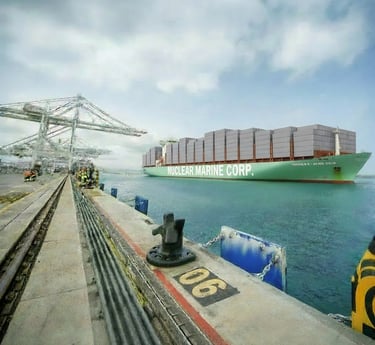
A Global Commercial Fleet Powered by Nuclear Energy — Zero Emission, Unlimited Range, High speed, and Economically Superior
Nuclear Marine Corporation's vision is a maritime industry in which advanced nuclear reactor technology is the primary energy source for medium and large commercial cargo vessels and the foundation of a global network of floating nuclear power platforms serving coastal communities, industrial ports, and energy-scarce regions worldwide.
We envision a future in which the vessels operate without a single tonne of fossil fuel combustion. We also envision floating nuclear power platforms deployed across all over the world, remote coastlines, and emerging port infrastructure, delivering clean baseload electricity and desalinated water where conventional grid connection is impractical or impossible.
This future will not arrive by itself. It requires the commercial, technical, and regulatory groundwork to be built now — before the first nuclear-powered commercial vessel enters service, before the first floating nuclear power barge is connected to a grid, before the regulatory frameworks that will govern these operations are finalised. Nuclear Marine Corporation's vision is to be the organisation that builds that groundwork: the vendor-neutral systems integration platform, the economic evidence base, the regulatory engagement record, and the project development expertise that the nuclear maritime industry will need when the technology is ready to deploy at commercial scale.
We are not waiting for that moment. We are working to create it.
Our Mission
Nuclear Energy for the World's Commercial Fleet — Before Anyone Else Gets There
Commercial shipping carries around eighty percent of world trade and is responsible for nearly three percent of global greenhouse gas emissions. The International Maritime Organization has committed the industry to net-zero by 2050. No alternative fuel — not LNG, not methanol, not ammonia — delivers the power density, operational range, zero-emission performance, and long-term cost advantage that advanced nuclear reactor technology offers at scale. The gap between that reality and the current state of the industry is where Nuclear Marine Corporation operates.
Our mission is to establish nuclear energy as a commercially viable, technically proven, and economically superior solution for the global merchant fleet and the floating power platform market — and to build the research, economic, and engineering foundation that makes that transition possible.
We do this by evaluating and integrating Small Modular Reactor and Micro Modular Reactor technologies into commercial cargo vessels and floating nuclear power platforms as a vendor-neutral systems integrator; by producing the rigorous economic models, regulatory analyses, and project development frameworks that transform nuclear maritime from a long-term vision into a near-term investable proposition.
Our mission is not theoretical. It is grounded in the operational reality of the industry we are committed to transforming
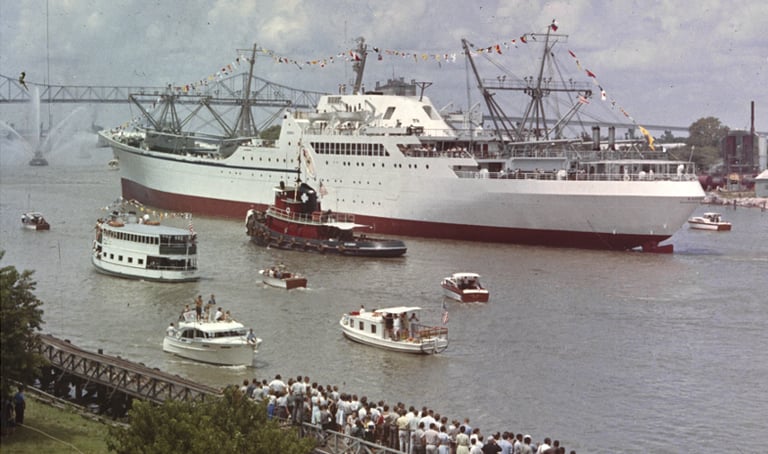
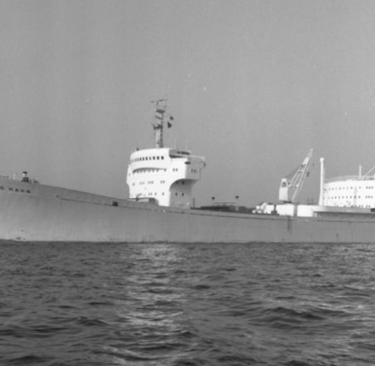
NS Savannah , 1962
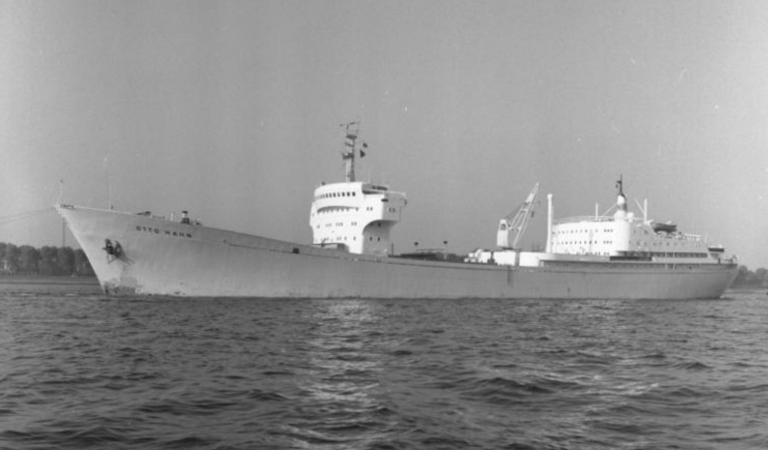
NS Otto Hahn , 1970
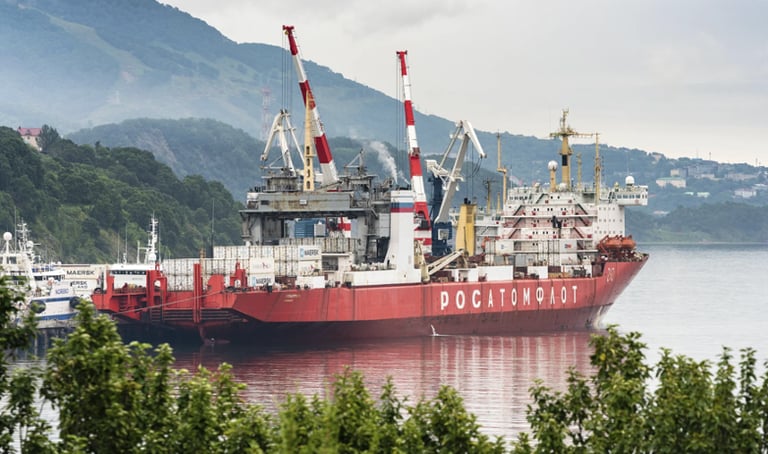
NS Sevmorput , 2021
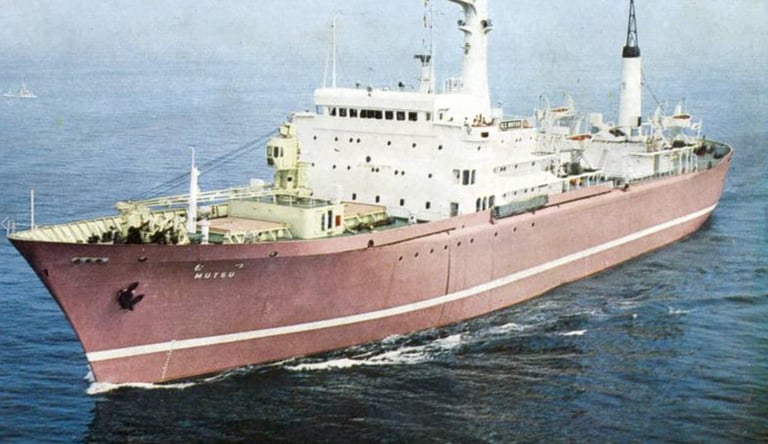
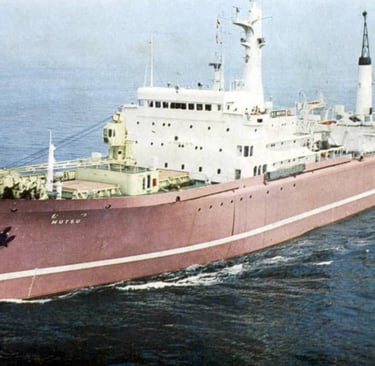
NS Mutsu , 1990
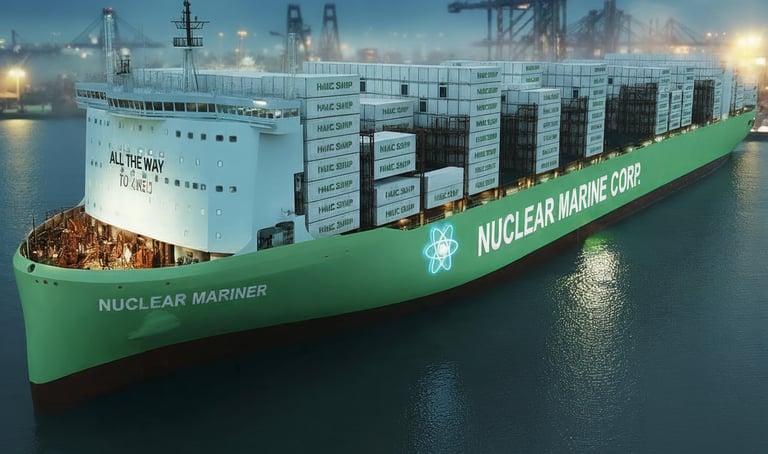
NS Nuclear Mariner , 2034
Providing research, consultancy, economic modelling, system integration, and project development for application of civil Nuclear Technology in the Maritime Industry.
Nuclear Marine Corporation is a UK and US registered deep-technology start-up company specialising in the research, economic analysis, project development, and systems integration of advanced civil nuclear reactors for commercial maritime and offshore energy applications. We focus on two of the most strategically significant opportunities in the global energy transition: nuclear-propelled commercial cargo vessels, and floating nuclear power platforms capable of delivering clean baseload electricity and desalinated water to coastal communities, industrial ports, and energy-scarce regions worldwide.
We are developing, and will operate as a vendor-neutral systems integrator. We do not design or manufacture reactors. Instead, we evaluate, select, and develop the integration architecture that connects the best available Small Modular Reactor and Micro Modular Reactor technologies from leading global developers to purpose-designed maritime platforms — creating the technical, economic, and regulatory case for each specific application and client. This positioning is deliberate: the nuclear reactor landscape is evolving rapidly, with dozens of advanced designs at varying stages of development, and the maritime industry's needs are specific, demanding, and operationally distinct from land-based power generation. Nuclear Marine Corporation exists at that intersection, and act as a catalyst between nuclear, and maritime industries.
The Commercial Opportunity
The global commercial fleet comprises approximately 100,000 ocean-going vessels, of which 50,000 are classified as medium to large size. Roughly 10,000 of those are large or very large vessels — crude tankers, container ships, bulk carriers, LNG carriers — operating on deep-sea trades where voyage distances are measured in thousands of miles and fuel consumption is measured in hundreds of tonnes per day. These vessels are the primary near-term target for nuclear propulsion deployment.
The economics are compelling and becoming more so. Under the International Maritime Organization's 2050 net-zero commitment, the European Union Emissions Trading System now applied to shipping, and the Carbon Intensity Indicator framework imposing escalating operational restrictions on high-emission vessels, shipowners face a compounding cost penalty for fossil fuel operations that will intensify significantly through the 2030s and beyond. Our lifecycle economic modelling — built on the actual cost structures of commercial maritime operations, not theoretical projections — demonstrates that nuclear propulsion delivers a financially superior outcome over a vessel's operational life cycle. The advantage is not marginal. For large vessels on long-distance trades, it is decisive.
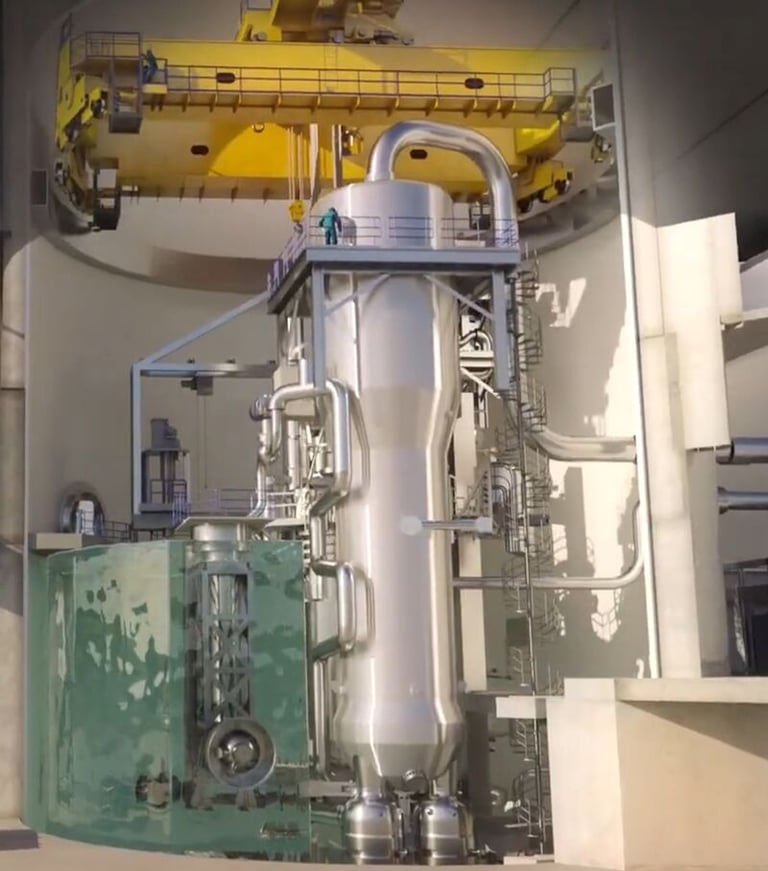
Floating nuclear power platforms present a parallel and equally substantial opportunity. The Second-generation floating platforms using advanced MMR, and SMR designs are now in development globally, targeting coastal electrification, port energy supply, desalination, and offshore industrial applications. Nuclear Marine Corporation is developing the integration architecture platform specifically designed for multi-application deployment.
A Market That Has Never Been Fully Realised
The private ownership and commercial operation of nuclear-powered merchant vessels with advanced nuclear technology has never been achieved. Military nuclear propulsion has operated successfully for decades across submarine and surface fleet applications. Three commercial nuclear vessels were built and operated in the twentieth century — the American NS Savannah, launched in 1959 as a demonstration of peaceful nuclear power; the German NS Otto Hahn, which completed 126 voyages between 1968 and 1979 carrying ore across the Atlantic; and the Japanese NS Mutsu, completed in 1991 after a lengthy development programme. All three demonstrated that nuclear-powered commercial vessels could be designed, built, and operated safely. None generated the commercial or regulatory momentum needed to catalyse private investment and fleet-scale deployment.
The reasons are well understood: reactor technology of that era was too large, too expensive, and too demanding of specialised operational infrastructure for commercial maritime economics. That calculus has now fundamentally changed. Advanced SMR and MMR designs — compact, passively safe, designed for modular deployment and minimal on-site refuelling requirements — are being developed at a pace and scale that makes commercial maritime integration a realistic near-term proposition for the first time. The regulatory environment is moving in parallel: the IMO is actively updating its Code of Safety for Nuclear Merchant Ships, classification societies including ABS, DNV, and Lloyd's Register have published nuclear maritime rules and guidance. The window for establishing leadership in this space is open now.
Our Services
Nuclear Marine Corporation provides research, economic modelling, consultancy, project development, and engineering services across the full development arc of a nuclear maritime or floating power project — from the initial evaluation of whether nuclear is the right solution for a given application, through rigorous technical and commercial analysis, to a fully structured project development plan with a credible regulatory and financing pathway.
Our work encompasses economic lifecycle feasibility studies, carbon penalty impact modelling, reactor technology selection and evaluation, conceptual integration design, international regulatory framework analysis, flag state and port state strategy, classification society engagement, investment planning, and policy development. We engage, and follow directly with the IMO regulatory process and the technical standards of the IAEA and national nuclear regulatory authorities including the USA, and UK Office for Nuclear Regulation. Our research covers all relevant decarbonisation pathways — including LNG, methanol, and ammonia — evaluated rigorously against nuclear propulsion across the specific vessel types, trade routes, and economic scenarios that matter to each client.
Nuclear Marine Corporation is at an early and deliberate stage of its development, advancing its technical and commercial work systematically toward the engineering validation and regulatory engagement milestones that will define the next generation of nuclear maritime deployment. We are building what the industry will need — before the industry fully arrives.
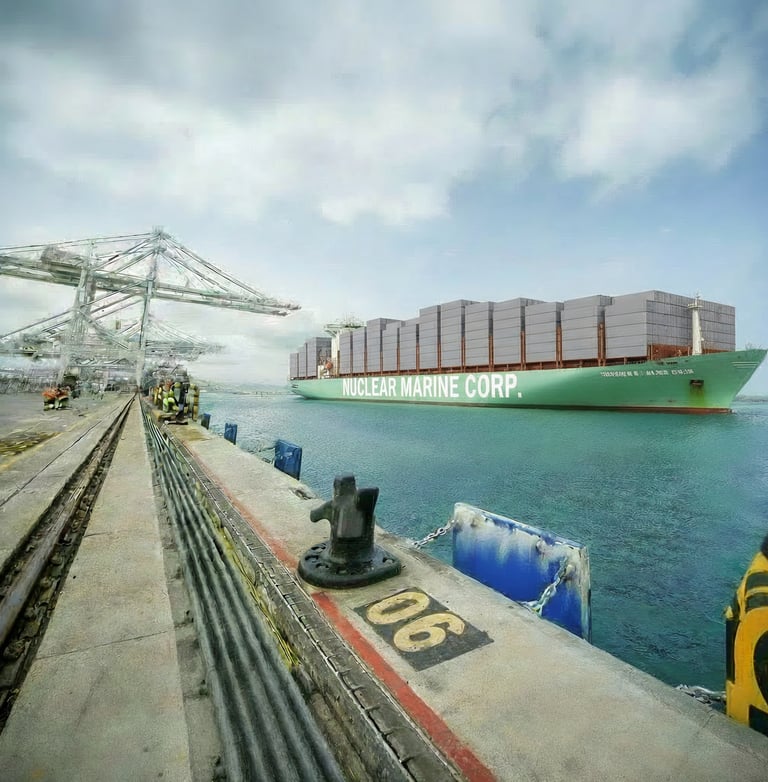

Contact Us
Get in touch for consultancy on nuclear technology and sustainable maritime solutions. We're here to help you navigate the future of shipping.
Phone:
Address:
Address:
Phone:
167-169 Great Portland Street, 5th Floor, London/UK, W1W 5PF